
天梯
全省第一!杭州这一地早稻亩产740.64公斤_我的网站

A | 近日,在萧山区党湾镇梅东村,杭州萧山沙地家庭农场的早稻高产攻关示范片迎来年度“大考”——省农技推广中心组织市外专家现场对连片10亩稻田进行实收测产,最终结果亮眼:该攻关示范片平均亩产达740.64公斤,夺得今年全省早稻亩产第一。

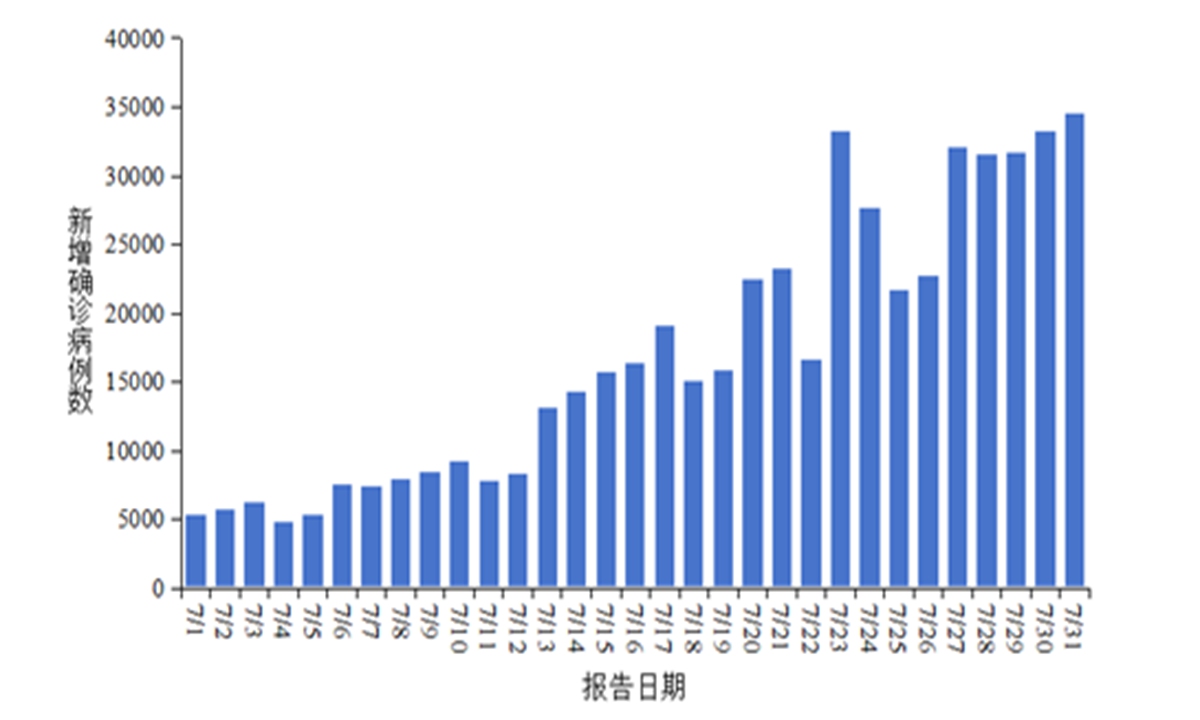
China reported 522,000 newly confirmed COVID-19 cases in July, including 487 severe cases and one related death with cases showing a fluctuating upward trend, China's national disease control authority said.
The current uptick in infections represents another regular cyclical wave, with its severity comparable to surges seen in the past two years. The upward growth curve has slowed markedly, and the country is now on the plateau phase of this epidemic peak, said the Chinese Center for Disease Control and Prevention (Chinese CDC) on Thursday.
All tested infection samples were confirmed to be the Omicron variant, with the NB.1.8.1 strain and its sublineages accounting for the majority of circulating cases, the Chinese CDC said.
A Beijing-based respiratory disease specialist told the Global Times that waning population immunity, continued virus mutations that weaken existing antibody protection, and increased summer travel have contributed to the recent modest rise in infections. However, there is no evidence that the virus has become more pathogenic. Nationwide infections appear to be nearing their peak and case numbers may begin falling in late August.
According to sentinel hospital surveillance data, from June 29-July 5 to July 27-August 2, the proportion of influenza-like illness among all outpatient and emergency visits at China's 1,041 COVID-19 and influenza sentinel hospitals edged up with slight fluctuations, standing at 4.3 percent, 4.4 percent, 4.5 percent, 4.4 percent and 4.5 percent, respectively.
During the same period, the COVID-19 positivity rate among patients with influenza-like illness in outpatient and emergency departments rose for consecutive weeks.
Several factors drove the fluctuating rise in COVID-19 cases in July. Population immunity has waned, as more than six months have passed since the last major wave of infections for most people, while continued SARS-CoV-2 mutations have reduced the protection provided by existing antibodies, Li Tongzeng, a respiratory disease medic from Beijing You An Hospital to the Capital Medical University, told the Global Times on Friday.
These factors, combined with increased travel and population mobility during the summer vacation, contributed to the recent small-scale surge. Based on patterns observed in recent years, COVID-19 infections tend to rise every six to eight months as population immunity declines, said Li.
The expert noted that while the virus continues to mutate, there is no evidence that it has become more pathogenic. Clinical data show that most patients develop only mild symptoms, with very few progressing to pneumonia or requiring hospitalization.
The Chinese CDC noted on Thursday that since COVID-19 was reclassified as a Category B infectious disease under Category B management, it has evolved into a prevalent, recurring respiratory infectious disease in China, with one to two epidemic fluctuations occurring nationwide each year.
Li also noted that residual immunity from previous infections also helps reduce disease severity, with most reinfections presenting as mild upper respiratory symptoms that resolve within about a week. The single COVID-related death reported nationwide in July further indicates that the current fatality rate remains very low.
Judging from historical epidemic patterns and current case growth trajectories, national infection figures may begin to decline in late August. Nationwide case numbers are now nearly at their peak, with declines already observed in some regions, said Li.
The Chinese CDC also said on Thursday that surveillance had not detected any variants posing major public health risks, nor had the current wave caused notable disruptions to the healthcare system.
The public is advised to take appropriate protective measures, including wearing masks when necessary, maintaining good personal hygiene, adopting healthy lifestyles and getting vaccinated as recommended.
。这份沉甸甸的丰收来得不容易。在场的萧山区农技专家介绍,相较去年,今年早稻生长期阴雨天气偏多,光照、积温明显不足,制约水稻光合作用与养分积累,整体生长态势受限。杭州农技团队选择与天气“抢”产量。市区两级专家扎进田间地头,手把手指导农户精准施策、科学管护。以精细化田间管理对冲天气短板,稳稳守住了粮食产能底线——育秧阶段,攻关示范片创新采用大钵体毯状苗育秧技术,精细化培育壮秧,夯实高产基础。这套技术有效降低了插秧漏插率,助力秧苗移栽后快速返青、早生快发、有效分蘖,为稳产高产筑牢根基。施肥管护环节,田间全面应用侧深施肥技术,将肥料精准施于秧苗根部,大幅减少养分流失,有效提升肥料利用率,实现节肥、增效、稳产多重效果。

B | 同时,攻关示范片此次选用适配本地水土气候的优良品种“嘉育25”,该品种兼具优质、高产、高抗等优势,成为不利天气下逆势高产的核心支撑。这份“全省第一”的荣誉,是杭州扎实抓粮油生产增效的一个生动注脚。今年,杭州市本级计划安排“米袋子”资金1.7亿元,其中粮油适度规模经营资金5380万元,真金白银调动农民种粮积极性。全市还布下了150个以上各级绿色优质高产高效创建区块,以点带面推广良种、良法和高效模式。农技专家更是频繁奔走一线,开展指导服务300余次,解决生产实际问题80余个。同时,杭州还建起了粮食和蔬菜应急储备库,为农业生产系上“安全带”。粮食生产,一季接一季,一茬接一茬。下半年,杭州将重点抓好晚稻夏播和早稻夏管专业指导,确保全年粮食生产任务圆满完成。

C | 在蔬菜稳产保供上,将巩固提升现有基地,新建一批优质稳产基地,同时,持续抓好历史经典产业建设指导、现代种业管理和农业防灾减灾工作,让更多田块像这片示范片一样,在风雨中依然能交出沉甸甸的丰收答卷。
Current article:http://dafq.fanfutaopoulaxiong.pics/x5u/uzuun.html
Published on:18:01:33
我的网站最近更新
- 【独自】愛子さま、宮内庁も報じなかった“極秘夕食会”、ラオス大使が明かしたお言葉と“贈り物”の中身
- 官方:尤文图斯租借签下格拉巴拉,租期至2027年6月30日
- 王霜留洋美国上演首秀 下半场替补登场
- Jake and Romy Reiner Break Silence on Parents Rob and Michele Reiner’s Tragic Deaths
- 河北省作协与河北出版传媒集团合作推出两套精品丛书
- 哈兰德剪去标志性长发,以全新寸头形象迎接新赛季;曼城将于今晚在阿提哈德球场对阵伯恩茅斯
- 福州发布一批人事任免通知
- 透景生命:2026年上半年度公司合并报表范围内整体转回各项资产减值准备合计约854万元
- 双色球一等奖5注808万元,奖池4.01亿元
- 抚顺特钢:“高精特新”引领“老字号”企业高质量发展
- 명지대 건축학전공, 광화문광장 ‘제15회 UAUS 파빌리온전’에 ‘딴짓’ 주제 작품 출품
- 重庆官方:网传与事实有出入
- HMD Salo 手机曝光:面向 B 端市场,搭骁龙 4 Gen 2 处理器
- 【安全之窗】122全国交通安全日 晋江市罗山街道苏前幼儿园致家长的一封信:文明交通,安全“童”行
- 公募老将领衔的加密资产第一股,成长性存疑
- 工信部不再审批新申报的锂电产能?工信部工作人员:未在官网查询到相关信息
- 体彩公益金让每一份爱心都有迹可循
- 活力中国调研行丨福建:特色产业“链”上新文旅,活力中国调研行丨福建:特色产业“链”上新文旅
- 受台风“梅花”影响,9月14日台州全市停课1天
- 女子把年假当年会奖励被公司开除
- 2025香港车博会:带空气悬架的皮卡ETERRON 9发布/MGS5 EV亮相
- China launches new energy hybrid cruise ship on Yangtze River
- UK can help SL on terror attack
- 迪萨西:水晶宫正朝着很好的方向发展,这是我继续生涯的理想之地
我的网站热门资讯
- G95高速国道G107线至榆林互通段改扩建工程北半幅建成通车
- 2025京东618活动哪天最划算?是5月30晚8点买最便宜还是6月18日当天买最划算?
- Tanzania signs a port management deal with Dubai-based company despite protests
- 福州发布山洪灾害风险红色预警
- [连山]普及无偿献血知识
- Nginx limit_req 限流:几行配置挡住大部分CC攻击
- 砥砺奋进普法路 法治沃土育新篇
- Exclusive: Tarun Mansukhani Reveals What Shocked Him Most About The Kapoor Family
- iPhone 14 Plus减产规模在70%-90% 刷新苹果历史
- 台球、精神小伙与终将衰败的县城
- 香港麦当劳:多轮检测显示虾饼样本未验出硝基呋喃,符合食品安全要求
- 这些“油老虎”,为何被政治骗子拿捏
- 超450家A股上市公司,合计分红超2300亿,超450家A股上市公司,合计分红超2300亿
- 链上分工协作 企业抱团共赢
- 危险的科技成长基金
- 物流装备业加速崛起
- 热议U18男篮惜败澳大利亚:裁判连续抢戏惹争议 媒体人评论一边倒
- 应急管理部针对广西启动国家地质灾害四级应急响应
- 欧盟气候机构:全球日均海表温度刷新历史纪录
- ST香雪“保壳”命悬一线
- 武契奇接待泽连斯基夫人,42岁外交官爱妻相伴,挺拔身姿很惹眼
- 女子近80万豪车停楼下被砸稀烂 当事人:这么多车 就唯独我的遭毒手
- 男篮亚洲杯:无缘四强 主帅杜锋向全国球迷道歉
- 勇士首场轻松战胜火箭,火箭季后赛前路注定将荆棘密布?